
In our showroom, we often get asked whether Bosch or KitchenAid makes the better dishwasher. The honest answer is that both can be strong choices, but they fit different buyers.
Bosch usually comes up when shoppers want a quiet dishwasher with a clean built-in look. KitchenAid often comes up when shoppers want sturdy racks, strong wash coverage and a more traditional premium feel.
Mark’s Appliance is an authorized seller and servicer for both Bosch and KitchenAid, with in-house sales, installation and service support. So we don’t look at this comparison only from a spec sheet. We also look at how the dishwasher fits your home after it’s installed.
Quick answer
Bosch is usually the better fit if quiet operation, subtle design and advanced drying options are high on your list. KitchenAid is usually the better fit if you want sturdy racks, strong loading flexibility and a more familiar American-style dishwasher feel.
Choose Bosch if...
- You want a quiet dishwasher, a clean built-in look and advanced drying options on select models.
Choose KitchenAid if...
- You want sturdy racks, strong wash coverage and a more traditional premium feel.
Compare both in person if...
- Rack feel, drying style, handle design or loading space matters to you.
Ask Mark’s first if...
- Service, installation, parts, current stock or local support could influence the better choice.
There’s no universal winner. In many cases, the best dishwasher is the model that fits your kitchen, your dishes and your daily routine better.
Key differences
Bosch and KitchenAid can both be good choices, but they usually appeal to different buyers. These are the main differences to compare:
- Design: Bosch has a cleaner, more subtle built-in look. KitchenAid feels more traditional, sturdy and premium.
- Noise: Bosch is often the stronger choice for quiet operation, especially in open kitchens. KitchenAid also has quiet models, so compare the actual dBA rating.
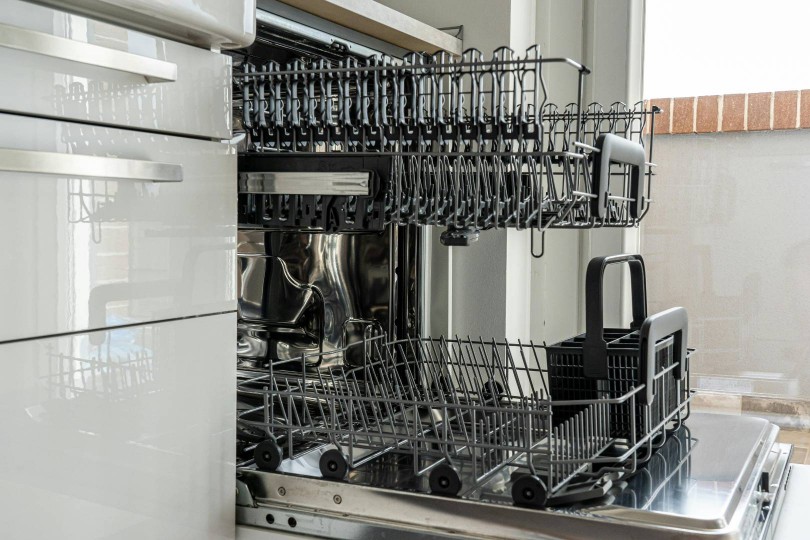
- Racks: Bosch racks are usually sleek and flexible. KitchenAid often feels roomier and more practical, especially on models with a FreeFlex third rack.
- Drying: Bosch offers systems like CrystalDry, AutoAir and PureDry on select models. KitchenAid offers ProDry and Advanced ProDry on select models. Compare the drying system, not just the brand.
- Cleaning: Bosch leans into precision and quiet performance. KitchenAid leans into wash coverage, with features like ProWash, 40+ or 50+ wash jets and 360° Max Jets on select models.
- Controls: Bosch often has hidden or minimalist controls. KitchenAid often feels more familiar and visible, depending on the model.
- Price: Both brands have entry-level, mid-range and premium models. Current availability and the exact feature set often matter more than the logo.
- Service: KitchenAid is generally easier for Mark’s technicians to work on and get parts for. Bosch tends to get fewer service calls, but Bosch parts can be more expensive when a repair is needed. In short: Bosch gets a slight edge for reliability, while KitchenAid gets the edge for ease of operation, wash performance and lower major repair cost.
The biggest mistake is comparing only the brand names. A better Bosch model can outperform a basic KitchenAid, and a better KitchenAid model can make more sense than a lower-level Bosch.
Where Bosch usually makes sense
Bosch is usually a strong fit if your dishwasher is close to your living space. If you have an open kitchen, a smaller home or a layout where dishwasher noise is easy to hear, a quieter Bosch model can be worth the extra attention.
Bosch puts a lot of emphasis on quiet operation. Its dishwasher lineup includes models with low dBA ratings, and Bosch highlights quiet operation as one of its main dishwasher strengths. Bosch also offers features like CrystalDry, AutoAir, PureDry, PrecisionWash, PowerControl, RackMatic and third rack options on select models.
Bosch also tends to appeal to shoppers who want a cleaner built-in look. The styling is usually simple, subtle and modern. That works well in kitchens where the dishwasher should blend in rather than stand out.
Bosch is usually worth considering if you want:
- quiet operation
- a clean front design
- flexible rack options
- advanced drying on select models
- smart control on select models
- a dishwasher that doesn’t visually dominate the kitchen
Is Bosch better for open kitchens?
Often, yes. If your kitchen opens into the living room or dining area, noise matters more. Bosch is often a strong fit because many Bosch shoppers are specifically looking for a quieter dishwasher with a cleaner built-in design.
That said, don’t choose by brand alone. Compare the actual dBA rating on the model you’re considering. A quiet KitchenAid model can still be a good fit for an open kitchen too.
Where KitchenAid usually makes sense
KitchenAid is often a good fit for busy kitchens where rack layout and loading space matter. If you regularly load mugs, bowls, cookware, tall glasses or awkward items, the way the racks feel can matter more than small differences in brand reputation.
KitchenAid highlights features like 40+ or 50+ wash jets, ProWash, 360° Max Jets third rack designs, MaxTub and ProDry or Advanced ProDry systems on select models. Some KitchenAid dishwashers are designed around stronger wash coverage and flexible loading across multiple racks.
KitchenAid also tends to feel more familiar to shoppers who like a traditional American premium dishwasher. The handles, controls and interior layout can feel sturdy and practical.
KitchenAid is usually worth considering if you want:
- sturdy rack design
- strong loading flexibility
- targeted wash coverage on select models
- a roomy third rack on select models
- familiar controls and design
- a more traditional premium appliance feel
Is KitchenAid better for family kitchens?
KitchenAid can be a strong fit for family kitchens, especially if you load a lot of cups, bowls, lunch containers and cookware. The rack layout may feel more practical if you care about usable space and targeted wash coverage.
Bosch can still be a good family dishwasher, especially if noise and drying are bigger concerns. The better choice depends on how your household actually loads dishes.
Reliability, service and parts availability
Reliability isn’t only about the brand name on the front of the dishwasher. From our service experience, the exact model, installation, parts availability and repair cost can matter just as much.
At Mark’s Appliance, we sell, install and service both Bosch and KitchenAid dishwashers. That gives us a practical view of how these brands perform after they leave the showroom, not just how they compare on a spec sheet.
From a service standpoint, our technicians generally find KitchenAid easier to work on and easier to get parts for than Bosch. Bosch dishwashers tend to generate fewer service calls, but when a Bosch does need a repair, parts can be more expensive than KitchenAid parts.
Based on our experience, we’d compare them this way:
- Reliability: slight edge to Bosch
- Wash performance: slight edge to KitchenAid
- Ease of operation: edge to KitchenAid
- Major repair cost: KitchenAid is often less expensive
That doesn’t mean one brand is always the better choice. It means service should be part of the decision. A Bosch model may be the better fit if you want quiet operation, clean design and strong reliability. A KitchenAid model may make more sense if you want easier operation, strong wash coverage and potentially lower repair costs if something major fails.
If you’re comparing two similar models, ask us which one we’d recommend based on your kitchen layout, how often you run the dishwasher, current parts support and long-term service expectations.
Price comparison
Bosch and KitchenAid both cover a wide price range, but they don’t always compete the same way.
Bosch dishwashers often start around the $700–$900 range and can go up to $2,000+ for higher-end models with quieter operation, CrystalDry, panel-ready designs or premium rack systems. Bosch is usually strong if you want quiet performance and clean design across several price points.
KitchenAid dishwashers often start closer to the $900–$1,000 range and can also move into the $1,500–$2,000+ range depending on the model, finish and features. KitchenAid is usually strong in the mid-range and premium range, especially if you care about rack space, wash coverage and ease of use.
The best value depends on what you’ll actually notice. If noise and drying matter most, a step-up Bosch may be worth it. If loading space, wash performance and easier operation matter more, a KitchenAid model may feel like the better buy.
User reviews
Both Bosch and KitchenAid get strong feedback from dishwasher shoppers, but usually for different reasons. Bosch is often praised for quiet operation, clean design and a more integrated feel in the kitchen. KitchenAid is often praised for strong cleaning performance, rack space and easy everyday use.
At Mark’s, that lines up with what we hear from customers. Bosch tends to attract shoppers who want the dishwasher to run quietly in the background. KitchenAid tends to attract shoppers who want a dishwasher that feels sturdy, practical and easy to load.
KitchenAid customer feedback
KitchenAid is usually a strong fit for busy households. Customers often like the rack layout, the solid feel of the interior and the way certain models handle mugs, bowls, cookware and everyday dishes.
KitchenAid also tends to be easier for many people to operate. The controls and layout feel familiar, and the brand has a practical, straightforward feel. If your main concerns are wash performance, loading space and ease of use, KitchenAid is often worth a close look.
Bosch customer feedback
Bosch is often the brand customers ask about when quiet operation is the priority. Many shoppers like that Bosch dishwashers can blend into the kitchen without drawing much attention, especially in open-concept layouts.
Bosch also has a strong reputation for reliability and clean design. Select models add features like CrystalDry, AutoAir or flexible rack systems, but the biggest reason many customers choose Bosch is still simple: they want a dishwasher that runs quietly and feels refined.
Which brand should you buy?
Choose Bosch if...
Choose Bosch if quiet operation is one of your top priorities. It’s especially worth considering for open-concept kitchens, smaller homes and kitchens near the living room.
Bosch is also a good fit if you like a cleaner, more integrated look. If your goal is a dishwasher that blends into the kitchen and doesn’t draw much attention, Bosch usually fits that style well.
Bosch may be the better fit if:
- your kitchen is open to the living room
- you care a lot about sound level
- you like a clean, modern design
- you want advanced drying options on select models
- you prefer subtle controls and a built-in look
- you want flexible rack options without a bulky design feel
Choose KitchenAid if...
Choose KitchenAid if rack layout and wash coverage matter most. If you load a lot of mugs, bowls, cooking tools or awkward dishes, KitchenAid’s third-rack and wash-jet options can be very appealing on select models.
KitchenAid may also be the better fit if you like a more traditional premium appliance feel. The design is often more visible and substantial than Bosch’s cleaner European-style look.
KitchenAid may be the better fit if:
- you want strong rack flexibility
- you load lots of mugs, bowls or cookware
- you like a more traditional premium design
- you want targeted wash coverage on select models
- you prefer a familiar American-style dishwasher feel
- you want a dishwasher that feels sturdy and practical inside
Final buying checklist
Before choosing between Bosch and KitchenAid, we advise you to check these points:
- Measure your dishwasher opening before choosing a model.
- Compare the actual dBA rating, especially for open kitchens.
- Look at the rack layout in person if possible.
- Compare drying systems, not just brand names.
- Check whether the third rack fits the items you actually wash.
- Ask which models are easier to service locally.
- Check current availability before falling in love with one model.
- Ask about delivery, installation and haul-away.
- Think about how often you actually run the dishwasher.
- Compare the full feature set, not just the logo on the front.
Bottom line
Bosch and KitchenAid both make strong dishwashers, but they usually appeal to different buyers. Bosch is often the better fit if you want quiet operation, a clean built-in look and advanced drying options on select models. KitchenAid is often the better fit if you care more about sturdy racks, loading flexibility and a more traditional premium feel.
The smartest choice is to compare the exact models, not just the brand names. Look at the dBA rating, drying system, rack layout, installation fit and local service support before you decide.
If you’re still unsure, Mark’s Appliance can help you compare Bosch and KitchenAid models side by side and choose the dishwasher that fits your kitchen, your dishes and the way your household actually uses it.
Frequently asked questions
Is Bosch better than KitchenAid for dishwashers?
Bosch is usually the better fit if quiet operation, clean design and advanced drying options matter most. KitchenAid is usually the better fit if rack layout, targeted wash coverage and a more traditional premium feel matter more.
Is KitchenAid better than Bosch for drying?
It depends on the model. KitchenAid offers ProDry and Advanced ProDry systems on select models, while Bosch offers drying systems such as CrystalDry, AutoAir and PureDry on select models. Compare the exact drying system, not just the brand.
Which is quieter, Bosch or KitchenAid?
Bosch is often the stronger choice if quiet operation is your main priority, but KitchenAid also offers quiet models. Always compare the exact dBA rating. KitchenAid notes that 44 dBA or lower can be considered quiet, and both brands offer models around that range depending on the series.
Which brand is better for families?
KitchenAid can be a strong fit for families because of its rack flexibility, wash coverage and third-rack options on select models. Bosch can also work very well for families, especially if noise, drying and a clean built-in look are top priorities.
Which brand is better for open-concept kitchens?
Bosch is often a strong fit for open-concept kitchens because of its focus on quiet operation and clean integrated design. KitchenAid can still work well if you choose a quieter model with the right dBA rating.
Do Bosch dishwashers dry plastics well?
Bosch models with CrystalDry are designed to improve drying, including plastics. Still, plastics can be hard to dry in any dishwasher because they don’t hold heat as well as glass, ceramic or metal.
Do KitchenAid dishwashers clean better than Bosch?
Not automatically. KitchenAid has strong wash-coverage features on select models, including 40+ or 50+ wash jets and 360° Max Jets third rack options. Bosch has strong sensor-driven and precision wash features on select models. The better cleaner depends on the exact model and your loading habits.